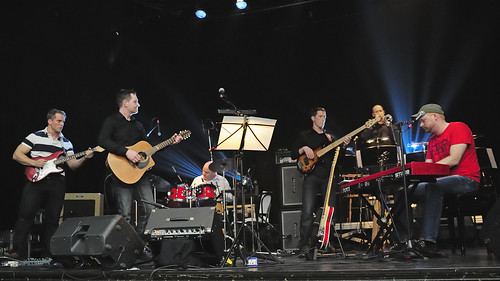
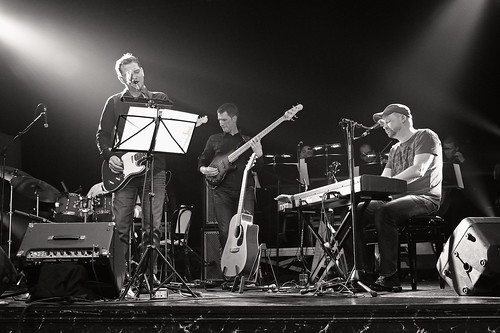
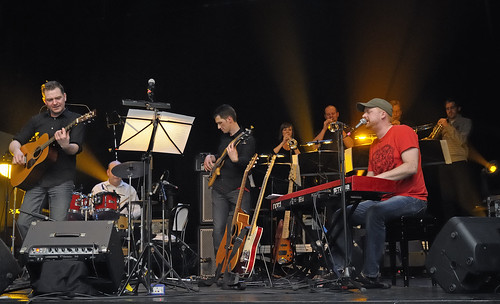
via notreble.com
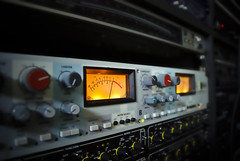
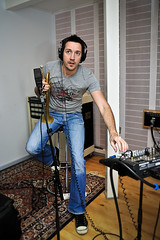
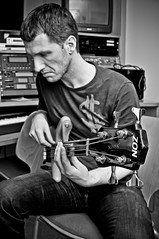
Cool bass. Could come in handy ;-)
Via: @notreble http://twitter.com/notreble/status/5291415315
Cool bass. Could come in handy ;-)
Via: @notreble http://twitter.com/notreble/status/5291415315


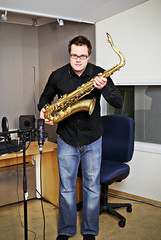
Matthew White gives the euphonium a new voice
Music video
The music video, directed by Hydra, first aired on MTV2 on 17th September 2009. The band performs through a miniature city in a small truck, with a lit fuse following behind. At times, they are also seen performing inside a trailer which seems to be exploding. Through the window of a TV shop the band at one point looks at TV's with teddy bears on the screens; Matt smashes the window and TV's with his guitar. At the end of the video a group of teddy bears rise up from the ground and start destroying the miniature city, only to fall down at the end of the video.

CD single cover Single by Muse from the album The Resistance Released 3 August 2009 (digital download)
What is Fair Play in Music? What does it really mean? Do you know? For those who are unsure here are 5 must know facts for artists about gogoyoko:
- Artists get get 100% of the sales profit
All power and value to the artists. No middle man. gogoyoko handles all VAT payments and royalties to music collection societies.- Get extra revenue from music streaming
Because getting a fair share from music sales is not fair enough.- You’re the boss
Artists get to set the price and promote and sell directly to their fanbase. Through gogoyoko artists can promote, distribute and sell their releases and soon live shows as well, communicate directly with their fan base and make contact with new listeners all over the world.- Charity
Charity plays a big role in our concept, with 10% of all advertisement revenues going to partnering international charity & environmental organizations. gogoyoko also provides artists with the opportunity to donate 10% of their music sales to charity.- gogoyoko is for everyone
And that means you too. Everyone can sign up for free and sell their music. There’s no filtering, no limits and no one we exclude. gogoyoko is made by artists for artists and we make no exceptions.
That’s Fair Play in Music. Sounds good?
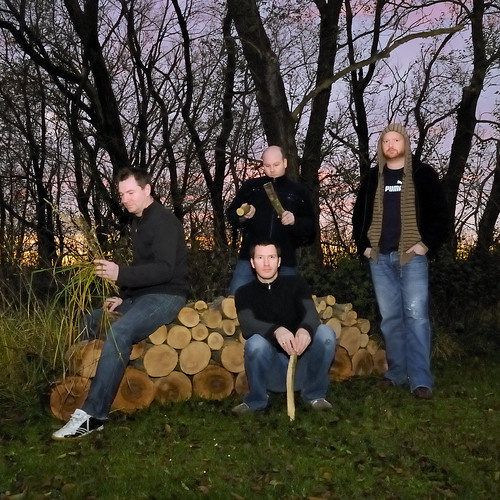
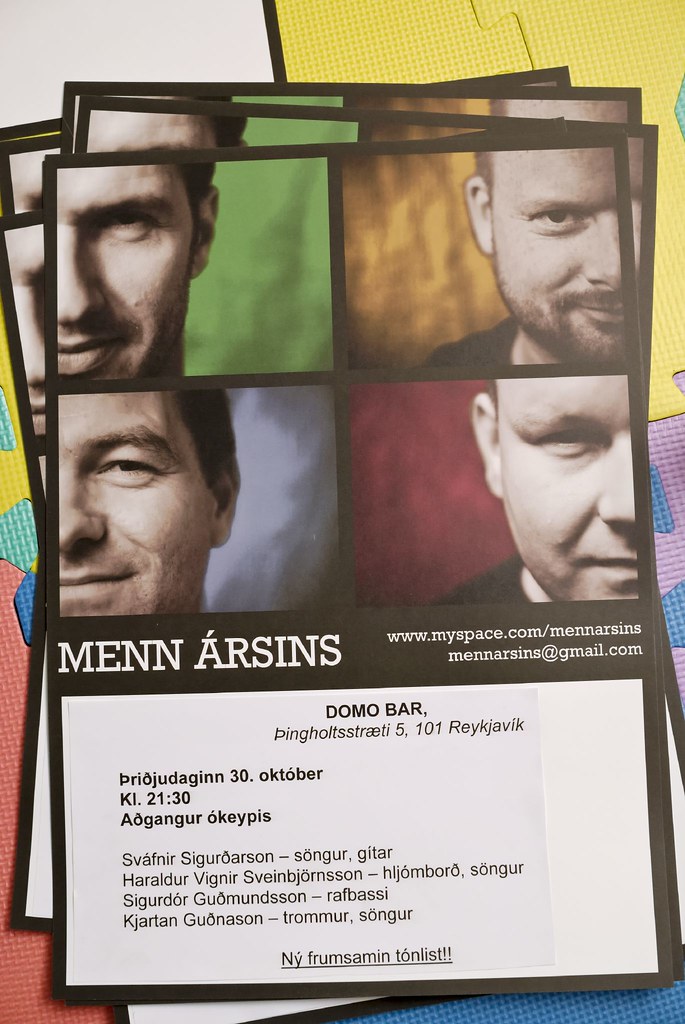
Check out Menn Ársins @ http://www.gogoyoko.com/#/artist/mennarsins
Nice sounding, hippie looking band :-) .... with a lot of reverb on the vocals. Enjoy! :)
Is Sex Irrational?
Evolutionary Biologist
As the legendary evolutionary biologist explains, human intercourse is far from a basic fact of life as the act throws away half of our genes and is therefore entirely irrational from an evolutionary perspective.
October 26, 2009 | In Science & Tech
The new John Lennon biopic Nowhere Man finally has a trailer. The new film chronicles Lennon's tender years before forming the Beatles, his troubled adolescent and his first efforts songwriting. The film, based on "Imagine This...", a book by Lennon's half sister Julia Baird, debuts tonight at a special showing in London with an official UK release date of December 25. No US date has been announced as of yet.
An online metronome ideal for quick and easy use while practicing music, this music tool helps with your rhythm as well as tempo selections and it is always available for free to all students of music at metronomeonline.com
How to use a metronome
A metronome is a practice tool that produces a steady pulse (or beat) to help musicians play rhythms accurately. The pulses are measured in beats-per-minute (BPM). Most metronomes are capable of playing beats from 35 to 250 BPM. Common uses of the metronome are helping you to maintain an established tempo while practicing, and learning difficult passages.
The first step in metronome use is to understand time signatures. Time signatures are found at the beginning of a musical piece, after the clef and the key signature. Time signatures (also called meter signatures) consist of two numbers. The top number indicates the number of beats in a measure, while the bottom number corresponds to the value of the beat. Most often, you will see 2, 3, 4 or 6 beats per measure. Beats are commonly half notes (the bottom number of the meter signature is “2”) or quarter notes (“4”) (the bottom number of the meter signature is “4”).
Here are a few common examples:
4/4: 4 quarter beats per measure (common time)
3/4: 3 quarter beats per measure
2/2: 2 half notes per measure (cut time)
Less easily understood time signatures are those with dotted quarters as the beat (compound time):
6/8: 2 dotted quarters per measure.
9/8: 3 dotted quarters per measure.
NOTE: even though this time signature reads 6 eighth notes per measure, this time signature usually refers to two beats per measure, where each beat is a dotted quarter, consisting of 3 eighth notes.
In western music (whether pop or jazz or classical or other) you either divide the beat into 2 parts (simple time signatures) or 3 (compound time signatures). The beat thus will either be a quarter, half or eighth note (for simple time signatures) or a dotted quarter or dotted half in compound time signatures. Simple time signatures are straightforward to read: 2/4 (two quarters per measure), 2/2 (two half notes per measure), etc.
Compound time signatures (6/8, 9/8, 6/4, etc.) actually tell you the division of the beat because we cannot express dotted values with a number. When the top number is greater than 3 and is divisible by 3 (6, 9, 12), you have to divide that number by 3 to get the actual number of beats per measure. E.g. 6/8: 2 beats per measure (6:3=2), and the beat is valued at a dotted quarter. 6/4: two dotted halves per measure.
If the music is very slow, then the composer may say something like "slow 8ths". In this case, you would indeed think of the 8th as the beat, but this you will see only at very slow tempi. In general, thinking of the 8th as the beat in compound time (especially at medium and fast tempi) will make the music sound choppy, and again, is simply an erroneous reading of the time signature.
Odd time signatures also exist in music:
5/4: 5 quarters per measure
7/8: 7 eighths per measure
Now that you understand the meter signature, determine the value of the beat and its appropriate tempo for the piece you are learning. For example, your desired tempo might be quarter note=120. (For more information, see the article on tempo markings.) This is quite brisk, and you may not notice it if you sway from it (rush=get faster unintentionally, drag=get slower unintentionally). Having the metronome give you the accurate pulses will help you stay on track.
At other times, most of a piece is easy to play except for a few measures. When faced with a challenging passage, practice the problem area at a slow tempo that allows you to play all the notes without mistakes (at quarter= 78, for example). Then, click the metronome up a few notches and try the passage at the faster tempo. If you can execute the passage 5 times in a row without any mistakes, you can click the metronome up a few notches again. Repeat this process until you reach the target tempo.
Article by Boglarka Kiss
I use this frequently when I'm teaching or practising No more buying batteries! :)
Question: What is love?
Noam Chomsky: I just know it's—has an unbreakable grip, but I can't tell you what it is. It's just life's empty without it.
Question: Who would you like to meet and spend time with?
Noam Chomsky: I have to say, the people who really impress me, when I have a chance to meet them, are people whose names nobody will ever hear. So, for example, in Southern—let me give you a personal, very personal example. A couple of months ago, I learned that extremely poor peasants in Southern Columbia, whose lives were being destroyed, in part by US run chemical warfare, called fumigation, which destroys their agricultural lands and communities. And in part just by the terror of the Columbian state and the, by now terror of the guerrillas that they're caught in the middle of, really miserable people. They just planted a forest in memory of my wife, who died a couple of months ago. That's one of the most moving things I've ever experienced. I've actually met some of them. I did go down and—but couldn't do much—I couldn't do anything for them, I just listened to horrible testimonies.
But these are people with real—and they're all over the world, with real human feelings, commitment, concern, a suffering beyond what we can imagine, but willing to do something for someone else they've never met. And you find things like that all over the place, here too. Some of the most moving experiences I've had are just in black churches in the south, during the civil rights movement, where people were getting beaten, killed, really struggling for the most elementary rights. Just asking for the congressional amendments during the Civil War, asking them to be implemented. Not particularly radical, but quite a battle, it continues like that. These are the really impressive people, in my view.
Recorded on: Aug 18, 2009

© 2009 Sigurdór Guðmundsson. All rights reserved.
Here's a photo I took of the Vadim Federov Trio. They then used it on their latest CD.
Trio Vadim Fyodorov becomes its name from the band founder, the russian acordion virtuos Vadim Fyodorov. In the band's repertory is jazz music with a france touch and some russian folk songs. This music fits both as backgroundmusic as well as for entertaining purpose.
Along with Vadim the band is formed by Gunnar Hilmarsson on guitar and Leifur Gunnarsson on doublebass. Vadim was born in St. Petersburg in 1969. He started playing acordion 6 years old at music school, then at the Rimsky Korsakov music collage. Vadim has been living in Iceland last 10 years and is on of the best active acordionist in Iceland.
The band recently released it's first album "Papillions Noirs".
[Via: http://www.lgtonar.com/bands/trio_vadim_fedorov/english.html]
See the photo @ www.nurturemusic.biz
You can also connect with the founder of the website on Twitter @jdargan
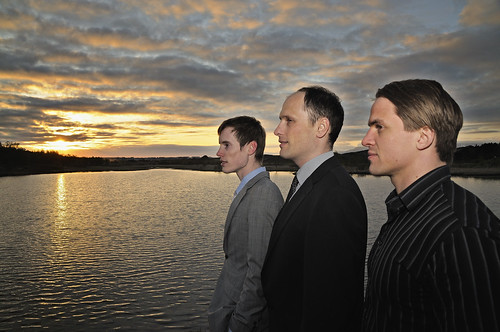

Photo by Grimur Bjarnason, Iceland
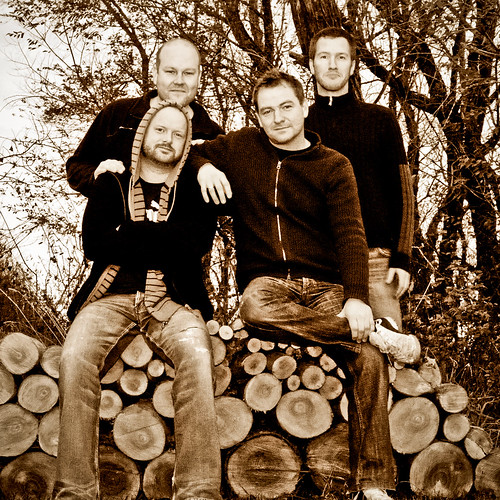
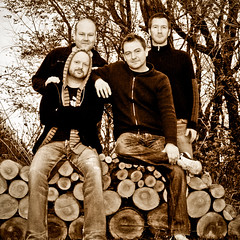
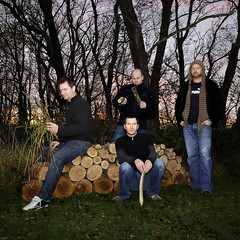
Check out this Menn Ársins promo-shot @ www.nurturemusic.biz
You can also connect with the founder of the website on Twitter @jdargan
(Menn Ársins are @mennarsins on Twitter)
Richard Dawkins is always brilliant.
Jeff Porcaro explains how he composed the groove for the song "Rosanna".
He ingeniously morphed together 3 beats. The Bernard Purdie "1/2 time shuffle" + "A Fool in the Rain" (Led Zeppelin / John Bonham) + the Bo Diddley rhythm figure!
Brilliant!
Toto - Rosanna (HQ Audio)
© 2009 Sigurdór Guðmundsson. All rights reserved.
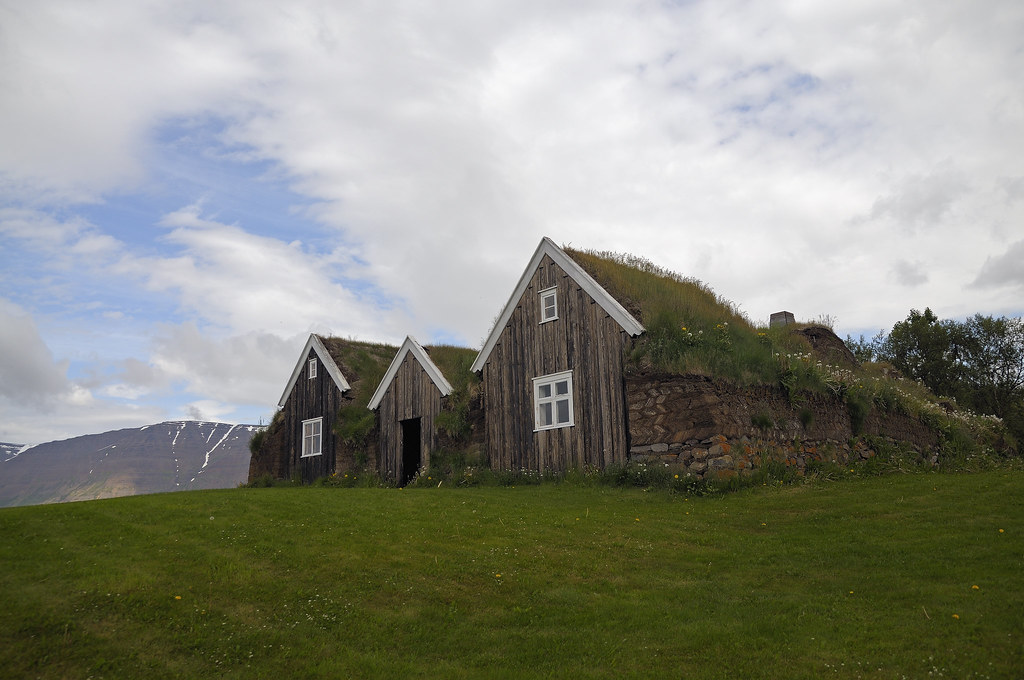
Hólar was founded as a diocese in 1106 by bishop Jón Ögmundsson and soon became one of Iceland's two main centers of learning. Hólar played an important part in the medieval politics of Iceland, and was the seat of Guðmundur Arason in his struggle with Icelandic chieftains during the time of the commonwealth. Under Jón Arason Hólar was the last remaining stronghold of Catholicism in Iceland during the Reformation. The best known Lutheran bishop of Hólar was Guðbrandur Þorláksson.
The first printing press was introduced to Hólar in 1530. Hólar Agricultural College was founded 1882. The college was renamed Hólar University College in 2003.